


10 Fascinating Facts You (Probably) Didn’t Know About the Colosseum

The Colosseum is one of the most iconic landmarks in the world—a true symbol of Rome’s grandeur and resilience. You’ve seen it in books, films, and postcards, but beyond its colossal arches lies a world of hidden stories and jaw-dropping curiosities. Here are 10 fascinating facts that will deepen your appreciation of this ancient wonder when joining Rome Bike Tours.
1. It Wasn’t Always Called the Colosseum
Originally, the Colosseum was known as the Flavian Amphitheatre, named after the Flavian dynasty of emperors who commissioned its construction. The name “Colosseum” likely came much later, inspired by a colossal statue of Emperor Nero that once stood nearby.
2. Built in Just 8 Years
Construction began under Emperor Vespasian around 72 AD and was completed in 80 AD under his son, Titus. Considering the sheer scale of the structure—seating over 50,000 spectators—this timeline is astonishing, especially without modern machinery.
3. Gladiator Fights Were Just One Part of the Show
While gladiator battles are the most famous events, the Colosseum also hosted animal hunts (venationes), mock sea battles (naumachiae), public executions, et dramas based on Roman mythology. These events were often politically motivated, designed to win favor from the public.
4. It Had a Retractable Roof—Sort Of
Le velarium was a massive awning system that covered most of the Colosseum’s seating area to protect spectators from the sun. Operated by sailors from the Roman navy, it’s a marvel of ancient engineering.
5. The Arena Floor Was Made of Wood
Today, you can see the underground chambers of the Colosseum, but originally, these were hidden beneath a wooden floor covered in sand (the Latin word for sand is “arena”). This area concealed trapdoors, elevators, and cages for animals and gladiators.
6. Over 500,000 People Died Here
Estimates suggest that more than half a million people lost their lives in the Colosseum during its 400 years of active use. Add to that over a million animals, and you get a glimpse of the brutal entertainment that once captivated Rome.
7. It’s an Earthquake Survivor
After the fall of the Roman Empire, the Colosseum suffered significant damage from a series of earthquakes, especially in 847 and 1349. Many of the fallen stones were repurposed to build other landmarks, including St. Peter’s Basilica.
8. A Sacred Transformation
In the 18th century, the Colosseum was declared a sacred site by Pope Benedict XIV in honor of the Christian martyrs believed to have died there. A cross was erected, and the site was used for religious ceremonies, especially during Good Friday processions.
9. A Symbol of the Anti-Death Penalty Movement
Since 1999, the Colosseum has been illuminated in gold whenever a death sentence is commuted or a country abolishes capital punishment. It’s a powerful reminder of how places of violence can become symbols of peace.
10. It’s Still Rome’s Heartbeat
Even today, the Colosseum is more than just a tourist attraction. It stands as a monument to Rome’s complex history—a blend of grandeur and tragedy, power and passion. Its silhouette at sunset, framed by the Via dei Fori Imperiali, remains one of the most moving sights in the Eternal City.
Discover the Colosseum—and So Much More—on a Rome Bike Tour
After reading all these intriguing facts, you might be itching to see the Colosseum with your own eyes. But why settle for the typical crowded walking tour when you can explore Rome like a local—with the wind in your hair and a gelato in hand?
Enter the Gemmes de Rome – Expérience en vélo électrique avec déjeuné: a Rome en vélo that combines history, adventure, and irresistible Italian cuisine.
Why This Tour is Different
This isn’t just about checking monuments off your list. It’s about feeling the heartbeat of Rome, discovering hidden corners and panoramic views that most tourists miss. You’ll start at the Colosseum, where your expert guide will share even more captivating stories beyond the ones you’ve just read.
Then, you’ll ride through:
- The Palatine Hill and Circus Maximus – Rome’s imperial playground.
- The Aventine Hill and Orange Garden – a serene spot with the most romantic view in town.
- The Keyhole of the Knights of Malta – a peek through time, framing St. Peter’s Basilica perfectly.
- Trastevere – a charming maze of cobbled lanes, street art, and secret piazzas.
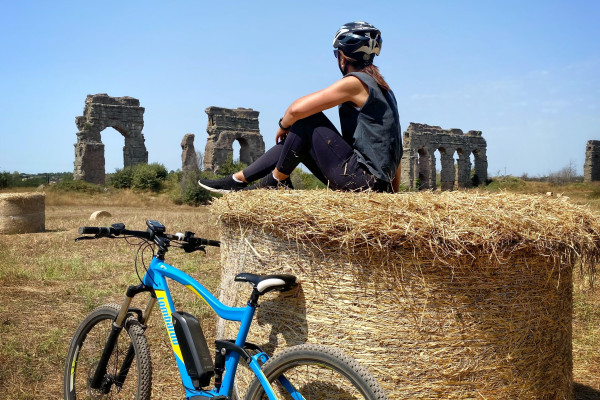
And yes—this Rome en vélo is also a culinary journey! Between landmarks, you’ll stop to taste three Roman specialties, including the famous Roman panino and artisan gelato.
Ideal for Travelers Who Want It All
Whether you’re visiting Rome for the first time or the tenth, this e-bike tour brings fresh perspective, energy, and flavor to your day. With small group sizes, expert guides, and premium e-bikes, you can cover more ground without breaking a sweat—literally.
Prêt à partir ?
The Colosseum is just the beginning. Let Rome unfold around you as you pedal through its ancient streets and taste its timeless traditions. Book your spot now on the Gemmes de Rome – Expérience en vélo électrique avec déjeuné, and get ready to fall in love with the Eternal City, one revolution at a time.
Réservez avec une flexibilité supplémentaire
Choisissez de nouvelles dates de départ si vos plans changent.
Contactez-nous à tout moment via le chat en ligne, par téléphone ou par e-mail.
Obtenez des points de crédit pour vos prochains voyages si vous avez besoin de plus de temps pour prendre une décision.
Passer à une autre visite organisée par le même opérateur touristique.