


Rome's Ancient Obelisks: Why Are There So Many Egyptian Monuments in the City?
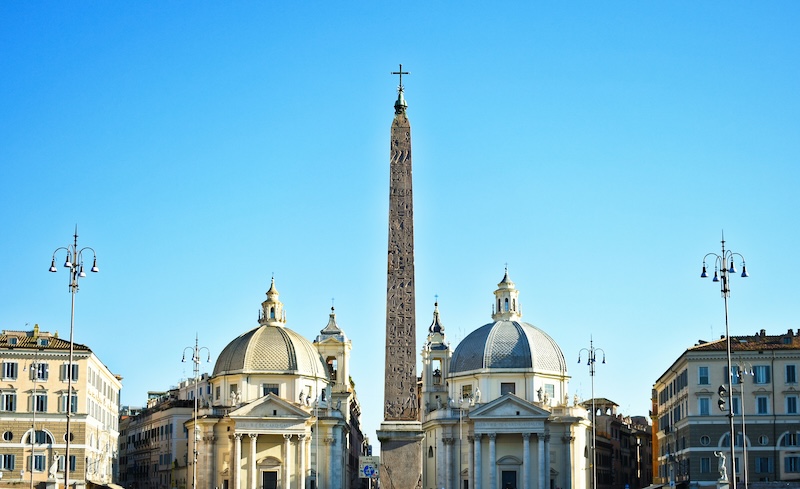
When walking through Rome, you expect to encounter Roman temples, Renaissance palaces, Baroque fountains, and ancient ruins. But look closely at some of the city’s most famous squares, and you will notice something unexpected: towering Egyptian obelisks rising above the surrounding buildings.
From Piazza del Popolo to St. Peter’s Square, these impressive stone monuments have become an unmistakable part of Rome’s skyline. Some are more than 3,000 years old, while others were created during the Roman Empire in imitation of Egyptian originals.
But why are there so many Egyptian obelisks in Rome? How did these enormous monuments travel from the banks of the Nile to the heart of the Eternal City? And what stories do they tell about the relationship between two of the ancient world’s greatest civilizations?
Discovering these extraordinary monuments on an Ruta en bicicleta eléctrica por Roma experience offers a fascinating opportunity to explore the city’s history from an unexpected perspective.
Why Did the Romans Bring Egyptian Obelisks to Rome?
The story begins in 30 BC, when Egypt became a Roman province following the defeat of Mark Antony and Cleopatra.
For centuries, Egypt had fascinated the Romans with its extraordinary architecture, religious traditions, and monumental sculptures. Its obelisks, originally erected to honour Egyptian gods and pharaohs, were particularly impressive symbols of royal and divine power.
After the conquest of Egypt, Roman emperors began transporting these monuments to their capital.
Bringing an enormous granite obelisk across the Mediterranean was an extraordinary engineering achievement. The monuments had to be carefully removed from their original locations, transported along the Nile, loaded onto specially designed ships, and eventually carried through Rome to their new destinations.
Their arrival was more than an architectural statement. It was also a demonstration of imperial power.
By displaying Egyptian obelisks in public spaces, Roman emperors celebrated their control over Egypt and incorporated the prestige of an ancient civilization into their own capital.
Emperor Augustus was among the first to introduce these monuments to Rome, establishing a tradition that would continue under later rulers.
Today, Rome is home to more standing ancient obelisks than any other city in the world, including Egyptian originals and monuments commissioned during the Roman period.
Piazza del Popolo: An Egyptian Monument at Rome’s Historic Gateway
One of the most spectacular obelisks in Rome stands at the centre of Piazza del Popolo.
Known as the Flaminio Obelisk, this impressive monument originally stood at Heliopolis, one of ancient Egypt’s most important religious centres.
It was commissioned during the reign of Seti I and completed under Ramses II in the thirteenth century BC.
Emperor Augustus brought it to Rome in 10 BC and placed it in the Circus Maximus, where it became part of the monumental setting for chariot races.
Centuries later, after the fall of the Roman Empire, the obelisk was buried and eventually forgotten.
It was rediscovered during the Renaissance and re-erected in Piazza del Popolo in 1589 under Pope Sixtus V.
Today, the monument rises above the square, surrounded by fountains and elegant architecture.
Its hieroglyphic inscriptions provide a remarkable connection to ancient Egyptian history, while its Roman and Renaissance settings reveal how different civilizations have reused and reinterpreted the same monument.
For visitors exploring central Rome, Piazza del Popolo is an excellent starting point for discovering the city’s Egyptian heritage.
Piazza Navona: An Obelisk Above a Baroque Masterpiece
Another fascinating example can be found in Piazza Navona, one of Rome’s most beautiful squares.
At its centre stands Gian Lorenzo Bernini’s magnificent Fountain of the Four Rivers, completed in 1651.
Rising above the fountain is the Agonalis Obelisk, a monument with an interesting history.
Unlike the Flaminio Obelisk, it was not originally created in pharaonic Egypt. It was commissioned during the reign of Emperor Domitian in the first century AD, with Egyptian-style hieroglyphs celebrating the emperor.
The monument was later moved to the Circus of Maxentius along the Appian Way before being brought to Piazza Navona in the seventeenth century.
Bernini incorporated it into his elaborate fountain, transforming an ancient imperial monument into the centrepiece of a Baroque masterpiece.
The fountain represents four great rivers associated with the continents known to Europeans at the time: the Nile, the Danube, the Ganges, and the Río de la Plata.
This extraordinary combination of Egyptian-inspired symbolism, Roman imperial history, and Baroque art perfectly illustrates Rome’s ability to reinvent its architectural heritage.
St. Peter’s Square: The Obelisk That Witnessed Ancient Rome
Perhaps the most famous obelisk in Rome stands in the centre of St. Peter’s Square.
The Vatican Obelisk is particularly remarkable because it has remained standing since antiquity, although its location has changed.
Originally brought from Egypt to Rome during the reign of Emperor Caligula in the first century AD, it was erected in the Vatican Circus, later associated with Emperor Nero.
The circus was located near the site where St. Peter’s Basilica stands today.
In 1586, Pope Sixtus V ordered the obelisk to be moved to its present position in front of the basilica.
The operation, directed by architect Domenico Fontana, required an extraordinary system of ropes, pulleys, wooden structures, and hundreds of workers.
The relocation became one of the most celebrated engineering achievements of Renaissance Rome.
Unlike many other Egyptian obelisks, the Vatican Obelisk has no hieroglyphic inscriptions.
Today, it stands at the centre of Bernini’s monumental colonnade, connecting the history of ancient Rome with the spiritual and architectural identity of the Vatican.
The Lateran Obelisk: The Tallest Standing Ancient Egyptian Obelisk
Not all of Rome’s extraordinary Egyptian monuments are found in its most famous tourist squares.
Piazza San Giovanni in Laterano is home to the Lateran Obelisk, the tallest standing ancient Egyptian obelisk in the world.
Originally erected at Karnak during the reign of Pharaoh Thutmose IV, the monument was transported to Rome in the fourth century AD under Emperor Constantius II.
It was placed in the Circus Maximus, where it joined the earlier obelisk brought by Augustus.
After centuries of abandonment, it was rediscovered and eventually re-erected near the Basilica of St. John Lateran in 1588.
Its enormous size and intricate inscriptions make it one of the most impressive surviving examples of ancient Egyptian monumental art.
Yet many visitors pass through the area without realizing that they are looking at a monument whose history began more than three millennia ago.
Why Did Renaissance Popes Restore Rome’s Obelisks?
The Roman emperors were not the only rulers fascinated by Egyptian obelisks.
During the Renaissance and Baroque periods, several popes began restoring and relocating ancient monuments throughout the city.
Pope Sixtus V played a particularly important role in this transformation.
His urban planning projects used obelisks as monumental landmarks, helping pilgrims navigate between Rome’s major basilicas and religious sites.
Many were crowned with Christian crosses, symbolically transforming monuments associated with ancient Egyptian religion and Roman imperial power into elements of Christian Rome.
This explains why Egyptian obelisks are often found in front of churches or at the centre of important public squares.
They represent not only ancient history but also the continuous transformation of Rome across different centuries.
Discovering Rome’s Obelisks on Two Wheels
One of the most fascinating aspects of Rome is how different historical periods coexist within a relatively compact urban landscape.
An Egyptian obelisk may stand beside a Renaissance church, a Baroque fountain, or the remains of an ancient Roman structure.
Exploring these contrasts on an Ruta en bicicleta eléctrica por Roma experience offers a different way to understand the city’s layered history.
Cycling through Rome allows travellers to move between neighbourhoods and historic squares while appreciating the architectural details that are easy to overlook when travelling by car or bus.
From Piazza del Popolo to the streets surrounding Piazza Navona, every corner reveals connections between civilizations, artistic movements, and historical periods.
Electric bikes also make longer journeys more accessible, providing pedal assistance when navigating Rome’s famous hills.
Although not every obelisk is included in a standard cycling itinerary, these monuments provide fascinating historical context for anyone interested in discovering the Eternal City beyond its most familiar attractions.
Explore the Eternal City’s Hidden Stories with EsBike Tours
Rome’s Egyptian obelisks remind us that the city has always been a meeting point of cultures, traditions, and civilizations.
What began as sacred monuments in ancient Egypt became symbols of Roman imperial power, landmarks of Renaissance urban planning, and distinctive features of the modern city.
Today, they invite visitors to look beyond the obvious and discover the extraordinary stories hidden in Rome’s streets and squares.
Con EsBike Tours, travellers can experience the Eternal City through guided electric bike tours that combine historical landmarks, local insights, and lesser-known places.
Whether exploring the monumental historic centre, discovering charming neighbourhoods, or following ancient routes beyond the city walls, an e-bike experience offers a dynamic and engaging way to connect with Rome’s past.
And sometimes, the most surprising discoveries are hiding in plain sight, like a 3,000-year-old Egyptian monument standing in the middle of an Italian piazza.
Ready to uncover another side of the Eternal City? Explore Rome on two wheels with EsBike Tours and discover the stories that make every street extraordinary.
Continúe leyendo:

Reserva con mayor flexibilidad
Elige nuevas fechas de salida si tus planes cambian.
Contacte con nosotros en cualquier momento a través del chat en línea, por teléfono o por correo electrónico.
Obtenga crédito para futuras reservas si necesita más tiempo para decidir.
Cambiar a otro tour organizado por el mismo operador turístico.